Sugar Without Sugar: What Really Stands Behind the «Sugar-Free» Label
Sugar-Free has become one of the fastest-growing categories in recent years.
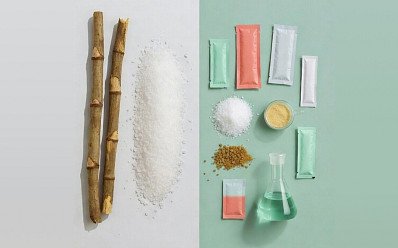
Yet there is still a lot of confusion around what it actually means.When sugar is removed, manufacturers use alternative sweeteners instead.The most common ones include:
- erythritol
- maltitol
- stevia
- sucralose
Each has its own characteristics and functional profile.
Erythritol
A sugar alcohol with minimal impact on blood glucose levels.
It contains almost no calories.
It may create a slight cooling sensation in taste.
Maltitol
Commonly used in chocolate products.
Similar to sugar in texture and mouthfeel.
In excessive amounts, it may cause digestive discomfort.
Stevia
A high-intensity plant-based sweetener.
Natural in origin, but not always neutral in taste.
Sucralose
A synthetic sweetener.
Extremely sweet and often used in beverages.
How Much Sugar Is “Allowed” Per Day? According to the World Health Organization:
- Added sugars should account for no more than 10% of total daily caloric intake.
- For additional health benefits, reducing this to 5% is recommended.
What does that mean in practical terms?
For an adult consuming around 2,000 calories per day:
- 10% equals approximately 50 grams of added sugar per day.
- 5% equals about 25 grams per day.
Twenty-five grams is roughly:
- 5–6 teaspoons of sugar
- or one 12 oz (330 ml) sweetened soda
And that includes only added sugars — not the naturally occurring sugars found in fruit or dairy.The reality is that most people exceed these limits by two to three times, often without realizing it.
Always Read the Ingredient List. The term Sugar-Free is not the final piece of information.
It’s the beginning of the conversation. It’s important to check:
- which sweeteners are used,
- whether syrups are included,
- the overall ingredient composition.
Why Sugar-Free Products Cost More
- Raw materials are more expensive.
- Formulations are more complex.
- Production volumes are typically lower than mass-market products.
The higher price reflects production costs — not simply a marketing trick.
Who Is It For? Sugar-Free products are often chosen by:
- people reducing their sugar intake,
- individuals managing their weight,
- those monitoring blood glucose levels.
It’s not a miracle product.It’s a tool for more conscious eating decisions.