Why Low-Cost Products Are a Hidden Category Risk
And How U.S. Federal Guidelines Are Reshaping Assortment Strategy
For 2025–2030, U.S. federal agencies (HHS and USDA) updated the Dietary Guidelines for Americans—a document increasingly used not only in the public sector, but also as a reference point for retail, grocery chains, and foodservice operators. The key shift is clear: from taste and price to ingredient composition, level of processing, and added sugar.
For retail chains, this means one thing: assortments with a high share of ultra-processed products are becoming high-risk categories—reputationally, regulatorily, and commercially.
If We Strip Away Consumer Messaging, the Guidelines Translate into Three Practical Signals
1. Added sugar is an undesirable component
The wording is unambiguous: “No amount of added sugars is recommended.”
This puts direct pressure on categories traditionally high in sugar: snacks, biscuits, and beverages.
2. Ultra-processed food is under scrutiny
Products with long ingredient lists, complex processing, and “reconstructed” components are increasingly viewed as risk items, not value drivers.
3. Simple formulas and transparent ingredients define the new “safe zone”
Short ingredient lists, no added sugar, and minimal processing are significantly easier to defend—to consumers, regulators, and internal compliance teams. It is a framework for assortment resilience.
The Hidden Cost of Cheap Products for a Category
In the short term, low-cost products deliver:
- low cost of entry
- fast sell-in
- visible margin contribution
In the mid-to-long term, they often create:
- erosion of trust in the category
- higher returns and disappointed repeat shoppers
- increasing pressure from ESG policies, wellness initiatives, and private retail standards
Retail is gradually shifting from “the cheapest SKU” to “the most defensible SKU.”
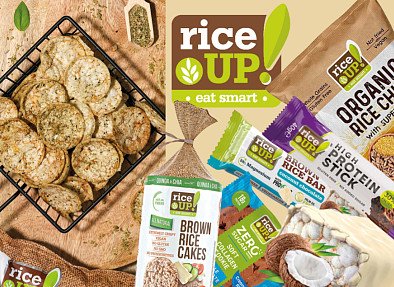
RiceUP — rice snacks as an alternative to ultra-processed snacks
To be precise: RiceUP is a range of rice snacks / rice cakes / bars, not whole grain rice.Why this matters for retail:
- simple rice-based structure instead of complex starch–sugar matrices
- short, readable ingredient lists
- no added sugar in key lines
- clear positioning as a better-for-you snack, not a niche “diet” product
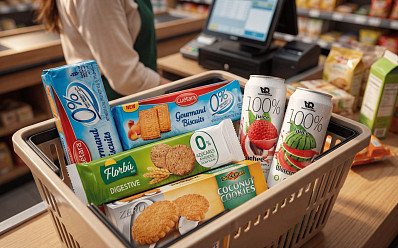
Cuétara Flourbu & Quickbury — biscuits with no added sugar
The biscuit category is one of the most exposed under the new guidelines. Our differentiation:
- true Sugar-Free formulations, not masked sugars
- no sugar-driven triggers that encourage overconsumption
- European recipe standards and quality discipline
This enables retailers to retain the biscuit category while shifting emphasis toward products that are easier to justify from both health and reputational standpoints.
American Drop — 100% juices with no added sugar
The guidelines explicitly identify juices with added sugar as a major source of “hidden calories.” Our approach:
- 100% fruit content
- no sugar, syrups, or sweeteners
- fully transparent recipes, no marketing workarounds
This reduces category risk and creates clear differentiation within the beverage set.
Cold-pressed smoothies in glass — a format with high regulatory durability
Cold-pressed technology delivers:
- minimal processing
- nutrient retention
- no need to add sugar for taste correction
Glass packaging further reinforces quality perception and premium positioning.
Our assortment:
- does not conflict with federal recommendations
- reduces regulatory and reputational category risk
- allows retailers to refresh shelves without disruptive resets
- combines sell-through performance with long-term sustainability
We are not selling a “health ideology.”
We are offering an assortment that will not become a liability two years from now.